The University of Southampton

Professor Susan Gourvenec

Royal Academy of Engineering Chair in Emerging Technologies in Intelligent & Resilient Ocean Engineering, Deputy Director of the Southampton Marine & Maritime Institute

Dr Kai Yang

Principal Research Fellow, Smart Electronic Materials and Systems Research Group

One of the most rewarding things about being an engineer is teaching the next generation of students and seeing them learn and grow to become the engineers that will tackle the problems of the future.

Dr Christina Vanderwel

Southampton engineers #ShapeTheWorld

International Women in Engineering Day (INWED20) celebrates the outstanding achievements of women engineers throughout the world and highlights the diverse career opportunities available to girls in this exciting industry. Now in its seventh year, this summer's international campaign is highlighting how women engineers #ShapeTheWorld.

Throughout Electronics and Computer Science (ECS), women are carrying out ground-breaking work in academic and industrial research. You can meet several of our academics and students in ECS and discover their stories on our ECS Women in Engineering page.

For INWED20, three leading women engineers from ECS and beyond have showcased their inspirational work and shared what they enjoy about being an engineer.

Dr Kai Yang

Principal Research Fellow, Smart Electronic Materials and Systems Research Group

What do you cover as an electronics engineer?

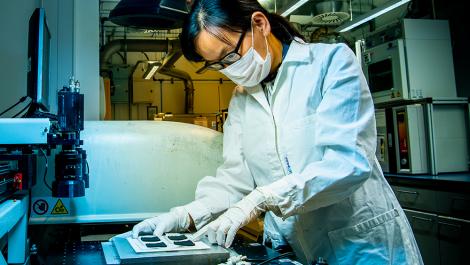
I develop electronic textile (E-textile) based wearable technologies for healthcare applications. My research involves the development of novelty functional materials, manufacturing processes such as printing and coating, and applications.

E-textiles are advanced textiles that include electronic functionality ranging from conductive tracks to sensing/actuating, communications and microprocessing. Advanced e-textiles technologies offer great opportunities to push the boundaries of wearable healthcare applications by improving the user experience (e.g. comfortable to wear, easy to use, unobtrusive) and motivating the user adherence.

In addition to the engineering work, I engage with the end users to understand their needs; I work with companies to gain insight on market need, manufacturing and commercialisation.

What is one project you’re focusing on that is helping shape the world?

I am currently working on my EPSRC Fellowship project on Advanced E-textiles for Wearable Therapeutics. The Fellowship project is developing wearable electrotherapy for knee joint pain relief for people with osteoarthritis (OA). OA is an age-related chronic degenerative musculoskeletal condition affecting 8.75 million people in the UK. Knee joint pain is one of the most common symptoms of people with OA. Knee joint pain constrains people’s movement and reduces their quality of life. Our wearable electrotherapy device will enable people to manage their pain at home independently which will lead to a better way of life while reducing the burden on society.

What do you enjoy about being an engineer?

Being an engineer offers me the opportunity to use my skills to develop technologies to solve big problems. I love building up prototypes using materials and processes we developed. My research is very much end user and market oriented because the end goal is to develop products people can access which will help them to live a better life. It has been a very enjoyable and rewarding journey to work with end users, technology developers and other key stakeholders. Their valuable insights have made my research more effective and useful.

Professor Susan Gourvenec

Royal Academy of Engineering Chair in Emerging Technologies in Intelligent & Resilient Ocean Engineering, Deputy Director of the Southampton Marine & Maritime Institute

What do you cover as an ocean engineer?

Ocean engineers are responsible for the life cycle of activities of designing, constructing, installing, operating and decommissioning engineered structures in the ocean.

There are many tens of thousands of structures in our oceans, tens of thousands of kilometres of pipelines and over a million kilometres of fibre optic cables. Together, these structures and networks provide energy, food and telecoms to populations around the globe. Ocean engineers are involved in characterising the seabed and metocean conditions at a site for a proposed development in order to determine the environmental parameters needed for design, in the design of the infrastructure, construction, installation, operation and safe decommissioning.

As Royal Academy of Engineering Chair in Emerging Technologies in Intelligent & Resilient Ocean Engineering, I drive change at all these stages of the engineered life cycle of ocean structures, developing tech-led ways to make them better – safer, more sustainable and more efficient.

What is one project you’re focusing on that is helping shape the world?

A key focus of my work is decarbonisation of the energy sector, which is central to addressing climate change. The oceans provide space and resources for renewable electricity generation. Our electricity demand is growing due to an increasing and increasingly wealthy global population and is set to increase more in the future to include the capacity to create future liquid fuels (e.g. hydrogen, ammonia, methanol) to replace fossil fuels for transport.

Emerging technologies offer immense potential to upscale the generation of ocean renewable energy in a safer and more efficient manner. Upscaling our use of the oceans must go hand-in-hand with increased knowledge of the effect of our interventions. Emerging technologies offer the potential to gather and interpret the necessary environmental, operational and structural data in a time-frame such that our impact can be assessed and our response can be effective.

What do you enjoy about being an engineer?

I enjoy a good challenge and playing my part in finding a solution. I enjoy the ability to challenge the status quo and enable positive change. I particularly enjoy being an engineer in a multi-disciplinary environment, with the richness of diversity of challenges and individuals that presents. 

Dr Christina Vanderwel

Associate Professor in Experimental Fluid Mechanics, Aerodynamics and Flight Mechanics Research Group

What do you cover as an aerodynamics engineer?

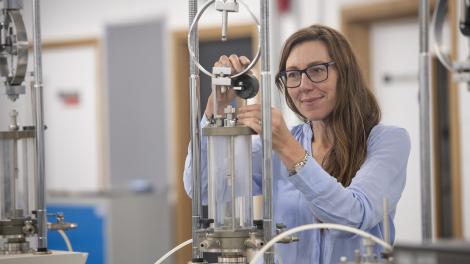
My research looks at understanding what turbulent flows are made of and how they can affect our environment. I use wind tunnel and water tunnel testing to visualise the vortices in the flow and how they contribute to the enhanced mixing and dispersion associated with turbulence.

One of the most rewarding things about being an engineer is teaching the next generation of students and seeing them learn and grow to become the engineers that will tackle the problems of the future.

Dr Christina Vanderwel

What is one project you’re focusing on that is helping shape the world?

This year I began a UKRI Future Leaders Fellowship, where I am currently applying my research to simulate urban air pollution in the lab. The aim of this project is to apply novel laboratory techniques to simulate wind patterns and air pollution in urban areas. These experiments will provide cutting-edge measurements that will improve our capability to model and predict urban air quality.

What do you enjoy about being an engineer?

I love doing experiments in the lab, designing and building new apparatus, that will let us visualise and measure different kinds of flows. It is then really satisfying to analyse those measurements and gain new insight into how turbulence works that no one else has ever seen before. But one of the most rewarding things about being an engineer is teaching the next generation of students and seeing them learn and grow to become the engineers that will tackle the problems of the future.

Published: 11 June 2020
Illustration

Computer scientists from the University of Southampton will guide software design to help curb cyber attacks on UK businesses in a major new research programme announced by Digital Secretary, Oliver Dowden.

Researchers in Electronics and Computer Science (ECS) have been awarded over £1.2M to transform the development of tech infrastructure and digital devices to reduce errors and security vulnerabilities that could have been exploited by hackers.

The Holistic Design of Secure Systems on Capability Hardware (HD-Sec) project, led by Principal Investigator Professor Michael Butler, will receive funding from the Engineering and Physical Sciences Research Council as part of a £10M investment in nine projects by the UK government.

Oliver Dowden, Secretary of State for Culture, Media and Sport, unveiled the 'Digital Security by Design' programme today at London Tech Week Connects.

Almost half of businesses (46 per cent) and more than a quarter of charities (26 per cent) have reported experiencing cyber security breaches or attacks in the last 12 months, according to the Cyber Security Breaches Survey 2020.

"Cybersecurity threats are causing damage to business and wider society and, if left unchecked, these threats will continue to grow," Michael says. "Poorly designed software is a significant source of cyber security vulnerabilities. Even if software has been verified correct, it is likely to be running on hardware that is vulnerable to cyber-attack because of poor memory protection."

Current software development practice relies heavily on an iterative ‘build-test-fix’ approach to software correctness and, while testing of software is essential, it is very time-consuming and usually incomplete, often resulting in design faults being discovered long after they were introduced in the development lifecycle – making them very expensive to fix once discovered.

"Our vision is the transformation of security system development from an error-prone, iterative build-test-fix approach to a correctness-by-construction approach whereby formal methods guide the design of software in such a way that it satisfies its specification by construction," Michael explains. "The impact of this will be to reduce overall development costs, while increasing trustworthiness, of security-critical systems."

The University's research will be guided and validated by a range of security-critical industrial case studies with support from industrial partners Airbus, Arm, Altran, AWE, Galois, L3Harris, Northrop Grumman and Thales.

The HD-Sec project is supported by ECS's Professor Vladimiro Sassone, a Professor of Cyber Security who holds a Royal Academy of Engineering Research Chair and is Director of the University's NCSC/EPSRC Academic Centre of Excellence for Cyber Security Research; Dr Thai Son Hoang, a leading researcher in refinement-based formal methods, including Event-B; Dr Leonardo Aniello, noted for his research on cyber security and distributed systems topics; and Dr Dana Dghaym, who has experience of tool development and verification in railway and maritime autonomous systems.

Articles that may also interest you

Share this article FacebookTwitterWeibo

Pages